By far the greatest contribution of the narrative is the insight it provides into the hows and whys of United States involvement in Vietnam, and the attempt of that involvement to bring freedom to those who were unable to achieve it by their own efforts. We see the United States more as a caretaker and less as a policeman in terms of motivation for its involvement half a world away. And
Read More
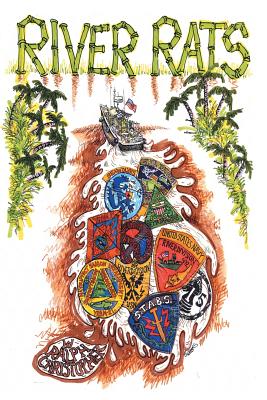
By far the greatest contribution of the narrative is the insight it provides into the hows and whys of United States involvement in Vietnam, and the attempt of that involvement to bring freedom to those who were unable to achieve it by their own efforts. We see the United States more as a caretaker and less as a policeman in terms of motivation for its involvement half a world away. And
Read Less
Add this copy of River Rats to cart. $2.47, very good condition, Sold by ThriftBooks-Atlanta rated 4.0 out of 5 stars, ships from Austell, GA, UNITED STATES, published 2005 by Authorhouse.
Add this copy of River Rats to cart. $2.47, good condition, Sold by ThriftBooks-Baltimore rated 4.0 out of 5 stars, ships from Halethorpe, MD, UNITED STATES, published 2005 by Authorhouse.
Add this copy of River Rats to cart. $2.57, very good condition, Sold by The Maryland Book Bank rated 5.0 out of 5 stars, ships from baltimore, MD, UNITED STATES, published 2005 by Authorhouse.
Add this copy of River Rats to cart. $4.00, good condition, Sold by Goodwill Books rated 5.0 out of 5 stars, ships from Hillsboro, OR, UNITED STATES, published 2005 by AuthorHouse.
Add this copy of River Rats to cart. $5.05, good condition, Sold by Wonder Book - Member ABAA/ILAB rated 5.0 out of 5 stars, ships from Frederick, MD, UNITED STATES, published 2005 by Authorhouse.
Choose your shipping method in Checkout. Costs may vary based on destination.
Seller's Description:
Good. Good condition. A copy that has been read but remains intact. May contain markings such as bookplates, stamps, limited notes and highlighting, or a few light stains.
Add this copy of River Rats to cart. $15.10, new condition, Sold by Ingram Customer Returns Center rated 5.0 out of 5 stars, ships from NV, USA, published 2005 by Authorhouse.
Add this copy of River Rats to cart. $15.95, fair condition, Sold by Goodwill Central & Coastal VA rated 4.0 out of 5 stars, ships from Richmond, VA, UNITED STATES, published 2005 by Authorhouse.
Add this copy of River Rats to cart. $19.00, like new condition, Sold by Wm Burgett Bks & Collectibles rated 4.0 out of 5 stars, ships from San Diego, CA, UNITED STATES, published 2005 by AuthorHouse.
Add this copy of River Rats to cart. $22.53, new condition, Sold by Ingram Customer Returns Center rated 5.0 out of 5 stars, ships from NV, USA, published 2005 by Authorhouse.
Add this copy of River Rats to cart. $25.00, like new condition, Sold by Jeff Stark rated 4.0 out of 5 stars, ships from Barstow, CA, UNITED STATES, published 2005 by AuthorHouse.
Choose your shipping method in Checkout. Costs may vary based on destination.
Seller's Description:
Fine in Fine jacket. 8vo-over 7¾-9¾" tall Fine in a fine jacket. Inscribed in felt pen by the author on the blank front end paper: "Thanks, Bob for teaching me the way. Ralph Christopher-The River Rats wrote a page in Naval."
My Experience in Vietnam Was Like A Football Game:
Review Written By Bernie Weisz, Historian, Vietnam War Pembroke Pines, Fl. USA Contact: BernWei1@aol.com March 30, 2013 Title of Review: My Experience in Vietnam Was Like A Football Game: At Halftime The Crowd Got Up And Left!
Just leaving his teen years behind, author Ralph Christopher idealistically found himself in South Vietnam's "Brown Water Navy," fighting on his fourth tour of duty the North Vietnamese and their lackeys, the Viet Cong on the tributaries of the Mekong Delta. Sure, the reader will get a detailed explanation of the Navy's usage of floating resupply barges, "Seawolf" helicopters, technical descriptions of swift and river patrol boats not to mention remote American bases deep in the jungle waterways of Southern Vietnam. But the true essence of this book is a patriotic Virginian that went to fight a war he believed in and felt America's role was dignified and righteous, only to be thwarted by our nation's disillusioned politicians and ignorant peace protesters that quit the cause of victory just as it was within realization. Christopher surrounds this patriotic memoir with everything from the bizarre to the macabre. From personally watching children kill and consume a twenty pound rat to an American Officer unknowingly eating the cooked liver of a slain enemy, the entertainment is nonstop. And let's not to mention Christopher's allusion to fraternizing with SEAL's on top secret missions deep in the middle of the Mekong. A most detailed day to day inclusion is added of the Navy's role in America's successful summer incursion of Cambodia, which the author painfully laments was thwarted by the domestic violence back home on the college campuses of both Kent and Jackson State Universities. In this historical, not to mention highly colorful goldmine of recollections, the reader upon turning the last page of this book will implicitly understand why Ralph Christopher unequivocally stated that he was a lost youth in the middle of an upside down war no longer really knowing why he had volunteered to be there!
Nevertheless, Ralph Christopher in "River Rats" makes a bold, yet angry statement. Using this memoir as his forum to confront and refute World War II Veterans that mocked returning Vietnam Veterans as "losers" as well as both the protesters and war weary Americans heavily influenced by the media's prejudicial "Yellow Journalism," Christopher speaks for the great majority of Vietnam Veterans when he emphatically insists that before the "pullout," an Allied victory was imminent. Christopher challenges this false "loser" tag by asserting; "It would be more accurate to say that the group of Americans who protested and voted for the Congress and Senate that tied the American fighting man's hands and imposed unfair rules of engagement on us throughout our time in service, and the South Vietnamese, lost the war. To put it on the shoulders of our brave and noble troops who distinguished themselves time and time again and tried desperately to deliver the people of Vietnam from the suppression and terror they encountered in their daily lives is merely continuing the abuse and pain of a generation. We who marched off proudly when our country called in a time when many chose not to were continuing the legacy of the American Liberators in attempting to deliver freedom to far off nations and people who had never known it." Christopher is referring to everything from the Navy not being able to fire at a target unless fired upon first, the political dictatorship of "Rolling Thunder," i.e. the aerial war where the President and his advisers selected military targets instead of allowing the principal military overseers in South Vietnam, and especially his wrath at our dogs of war not being allowed to be aggressively let loose on North Vietnamese Communists in their sanctuaries of Cambodia, Laos and even North Vietnam itself.
Perhaps the author best embodies his frustration when mentioning that despite deadly U.S. B-52 and artillery bombardments of the enemy; ""No matter what the cost, we all agreed that it was better than sacrificing one of our lives for a war that nobody seemed to care about back in the States." What was it that convinced Christopher that it would never be okay for the poor, mostly illiterate rice farmers so long as the potential for Communist victory existed after the American pullout? Christopher writes about the apathy and lack of aggressively determined spirit of the South Vietnamese Navy that would be forced to stand alone after complete "American" pullout. He makes no bones about why Richard Nixon's "Vietnamization" failed, e.g. handing the entire war effort to the mostly apathetic South Vietnamese with only military and financial assistance provided. The ultimate collapse was guaranteed after Congress completely cut off funds. Surely, the political reasons are the most solid. Chillingly, it is the aghast, barbaric anecdotes Christopher provided as the most convincing. From the Viet Cong butchering of a young girl for cooperating with Americans to a wholesale mass Communist slaughter of civilians massacred in Cambodia, their chained, bloated corpses floating past a horrified Christopher and his comrades in the sultry Mekong Delta gives a clear sense of impending danger to South Vietnam which occurred upon succumbing to the North. The lost cause is made blatant with Christopher's assertion of; "Most of the South Vietnamese sailors seemed reluctant to commit themselves to battle without their American counterparts beside them. The enemy seemed to have the determination and fire in their bellies and the South didn't. Most of us had lost the notion that we were going to make a difference; we were now fighting for each other and the right to return home and go to school like other kids our age."
A detailed explanation of battles waged by the U.S. Navy in the rivers and canals of South Vietnam is provided by Christopher, who clearly states that during his 1969-1970 tour the enemy was being soundly beaten. American River Divisions of PBR's and Swift Boats, called "River Rats" were soundly beating the enemy, patrolling the canals and waterways and cutting off the flow of North Vietnamese men and guns to Saigon and the Mekong Delta. Tragically, it was all for naught, as after the Cambodian incursion Christopher mourned. From soundly believing in protecting the poor South Vietnamese rice farmer from pillaging Communists wanting to steal their rice, rape their women and abduct their young men with impressment, Christopher's attitudes underwent a transformation. Witnessing his fellow sailors brandishing passed down flack jackets and helmets that were covered with hippie peace symbols after Vietnamization's near completion, Christopher wrote; "Much had changed from 1967. The veterans saluted us and the college kids threw feces and called us baby killers. I saw Vietnam through different eyes now; I had heard the stories of bravery. Men wouldn't be doing these things if they didn't believe in what they were doing even though parts of America had lost faith. It felt as if we were playing in the biggest game of our lives, and halfway through the crowd got up and left. Conveying the surreal nature of this war, Christopher added: "Back home the hippies were protesting our presence in Vietnam and we here fighting were wearing their symbols all over our gear. These were strange times we were living; I bet no other American conflicts were as weird as this one." After describing how American's were killed by friendly fire, accidental deaths and even how a sailor who freaked out on LSD and turned a machine gun on an ARVN base, Christopher concluded; "We were lost youths in the middle of an upside down war, not really knowing why we had volunteered to be there."