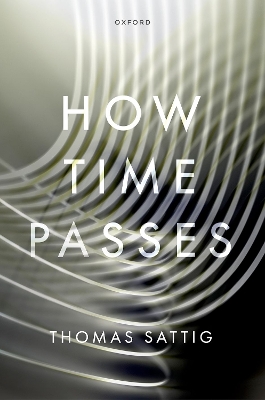
Time organizes things in a dynamic fashion, whereas space organizes things in a static fashion-so things in time undergo passage, whereas things in space do not. What makes the temporal organization of things dynamic? What is the nature of the passage of time? Traditional discussions of passage have taken one of two perspectives. Some philosophers start with passage as a phenomenon that occurs in the physical world. They ask what constitutes this objective phenomenon. Theirs is a project in metaphysics and the foundations ... Read More
Time organizes things in a dynamic fashion, whereas space organizes things in a static fashion-so things in time undergo passage, whereas things in space do not. What makes the temporal organization of things dynamic? What is the nature of the passage of time? Traditional discussions of passage have taken one of two perspectives. Some philosophers start with passage as a phenomenon that occurs in the physical world. They ask what constitutes this objective phenomenon. Theirs is a project in metaphysics and the foundations of physics. Others begin with passage as a phenomenon that is given in our experiences of the world. They ask what constitutes this subjective phenomenon. Theirs is a project in philosophy of mind and cognitive science. In How Time Passes, Thomas Sattig gives both perspectives on passage equal weight. The first part of the book concerns the existence and nature of physical passage. The second part is concerned with the existence and nature of experiential passage. In both parts, the standard kind of explanation of passage is juxtaposed with a new kind of explanation. On the tripartite approach, which has dominated classical and contemporary philosophy of time, the denizens of time undergo passage, in virtue of changing with respect to what is past, what is present, and what is future. On the geometrical approach, the denizens of time undergo passage, in virtue of being temporally organized in a manner that does not involve the holding of any geometrical relations between them. Read Less
Add this copy of How Time Passes to cart. $76.45, new condition, Sold by Just one more Chapter rated 4.0 out of 5 stars, ships from Miramar, FL, UNITED STATES, published 2025 by Oxford University Press.
Add this copy of How Time Passes to cart. $78.38, good condition, Sold by Bonita rated 4.0 out of 5 stars, ships from Santa Clarita, CA, UNITED STATES, published 2025 by Oxford University Press.
Add this copy of How Time Passes to cart. $91.77, like new condition, Sold by GreatBookPrices rated 4.0 out of 5 stars, ships from Columbia, MD, UNITED STATES, published 2025 by Oxford University Press.
Choose your shipping method in Checkout. Costs may vary based on destination.
Seller's Description:
Fine. Contains: Unspecified. Includes unspecified. Intended for professional and scholarly audience. In Stock. 100% Money Back Guarantee. Brand New, Perfect Condition, allow 4-14 business days for standard shipping. To Alaska, Hawaii, U.S. protectorate, P.O. box, and APO/FPO addresses allow 4-28 business days for Standard shipping. No expedited shipping. All orders placed with expedited shipping will be cancelled. Over 3, 000, 000 happy customers.
Add this copy of How Time Passes to cart. $97.96, new condition, Sold by GreatBookPrices rated 4.0 out of 5 stars, ships from Columbia, MD, UNITED STATES, published 2025 by Oxford University Press.
Choose your shipping method in Checkout. Costs may vary based on destination.
Seller's Description:
New. Contains: Unspecified. Includes unspecified. Intended for professional and scholarly audience. In Stock. 100% Money Back Guarantee. Brand New, Perfect Condition, allow 4-14 business days for standard shipping. To Alaska, Hawaii, U.S. protectorate, P.O. box, and APO/FPO addresses allow 4-28 business days for Standard shipping. No expedited shipping. All orders placed with expedited shipping will be cancelled. Over 3, 000, 000 happy customers.
Add this copy of How Time Passes to cart. $97.97, new condition, Sold by Ingram Customer Returns Center rated 5.0 out of 5 stars, ships from NV, USA, published 2025 by Oxford University Press.